



Merced's geography works against it during wildfire season. The Central Valley's bowl-like shape traps smoke close to the ground, so even fires burning hundreds of miles away can leave the sky here hazy for days.
A standard HVAC filter does almost nothing against that kind of smoke. Getting ahead of fall air quality season means upgrading the right components before the smoke actually arrives, not scrambling once the sky turns orange.
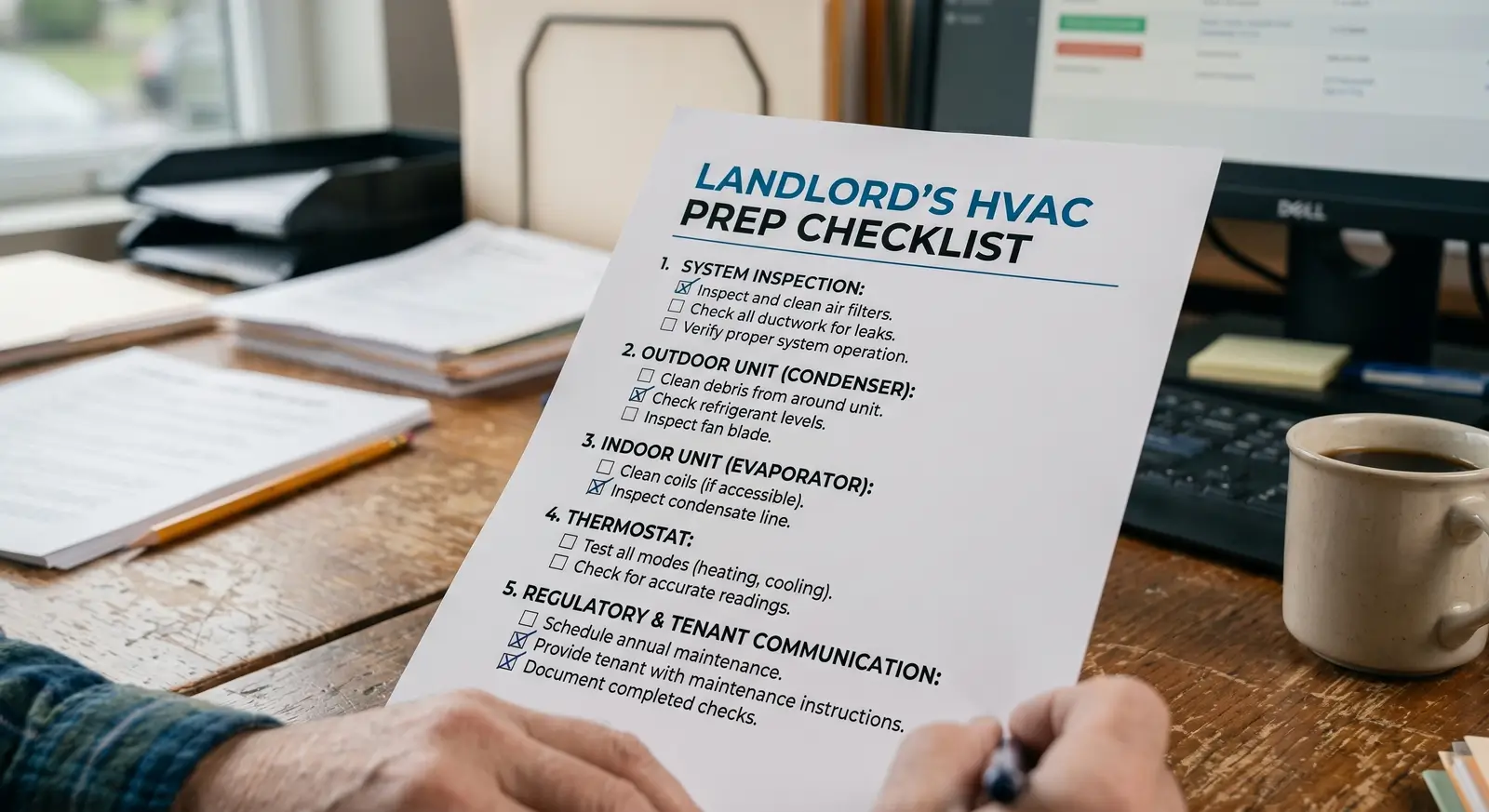
We oversee property management throughout Merced and the Central Valley, which is why we diligently follow this precise checklist each fall. Here’s a focus on what truly matters.
Key Takeaways
- A standard MERV 8 filter does almost nothing to stop wildfire smoke particles, which are small enough to pass straight through it.
- Upgrading to a MERV 13 filter, if your system can handle it, is the standard recommendation from both the EPA and California Air Resources Board.
- Setting the HVAC system to run continuously rather than cycling on and off matters as much as the filter itself during a smoke event.
- Smoke residue that settles inside ductwork during a bad fire season does not disappear just because you changed the filter afterward.
- Clear tenant communication before smoke season peaks reduces confusion and complaints once air quality actually worsens.
Why the Central Valley Gets Hit So Hard
The Central Valley's bowl-shaped geography traps pollution close to the ground, especially during temperature inversions on hot, still days. That means smoke from fires burning well outside the immediate area can still settle over Merced and linger for extended stretches.
This regional pattern is part of why fall preparation matters so much here specifically, even in years without a major fire burning nearby.
Upgrade to a MERV 13 Filter, If Your System Can Handle It
Both the EPA and California Air Resources Board recommend a MERV 13 filter or higher for wildfire smoke, since it captures the fine particulate matter that a standard MERV 8 filter simply lets through. These particles are small enough to reach deep into the lungs, which is why filtration matters beyond simple comfort.
Before upgrading, confirm the system can actually handle the increased airflow resistance a higher MERV filter creates. Not every HVAC unit is designed for it, and forcing a filter the system was not built for can strain the equipment.
Set the System to Run Continuously During Smoke Events
Running the HVAC fan continuously rather than on the standard auto cycle ensures air is filtered constantly during a smoke event, rather than only when the thermostat calls for heating or cooling. If the system draws in outside air, switching to recirculation mode during smoke events keeps outdoor particles from entering in the first place.
Seal Gaps Before Smoke Season, Not During It
Smoke and ash enter through gaps around doors, seals on windows, and any other small openings in the building envelope. It is much more effective to inspect and maintain weatherstripping and door sweeps in early fall, before smoke and ash actually arrive, rather than trying to seal a unit during an active air quality event when it’s already compromised.
What's Already in the Ductwork Matters Too
A fresh filter does nothing about smoke residue that has already settled inside ductwork from a previous bad fire season. Wildfire ash carries acidic compounds that can corrode coils and degrade ductwork over time, which means a property that went through a genuinely bad smoke season may need a professional duct inspection, not just a routine filter swap.
Our maintenance team includes this kind of inspection as part of fall prep for properties with a history of heavy smoke exposure.
Communicate With Tenants Before Smoke Season Peaks
A short note to tenants explaining how to keep windows closed during poor air quality days can prevent a lot of confusion once smoke arrives. It should also confirm who to contact if they notice reduced airflow or a burning smell from the HVAC system.
Frequently Asked Questions
Does a regular furnace filter protect against wildfire smoke?
Not effectively. A standard MERV 8 filter is designed to catch larger dust particles and does very little against the fine particulate matter found in wildfire smoke. A MERV 13 filter is the generally recommended standard.
Can every HVAC system handle a MERV 13 filter?
Not necessarily. Higher MERV filters increase airflow resistance, so it is worth confirming your specific system's manufacturer guidance before upgrading, rather than assuming every unit can accommodate it.
Should the HVAC fan run constantly during a smoke event?
Yes, running the fan continuously rather than cycling on the standard auto setting keeps air filtering constantly, which matters more during active smoke events than at other times of year.
Does one filter-change clear out smoke residue from a previous bad season?
Not fully. Smoke particles can settle inside ductwork and on components, and a fresh filter does not remove what has already accumulated. A professional inspection is worth considering after a particularly bad smoke season.
What should I tell tenants about the air quality season?
A short note covering keeping windows closed during poor air quality days and how to report any HVAC issues, like reduced airflow or unusual smells, helps prevent confusion once smoke actually arrives.
Let Us Handle Your Fall HVAC Prep
Wildfire smoke during the fall season in the Central Valley is a recurring and predictable concern. Taking proactive measures before air quality deteriorates not only safeguards your property but also ensures the safety and well-being of your tenants. Being prepared in advance is far more effective than responding reactively once the air quality index reaches hazardous levels.
At Rental Zebra, we build this exact checklist into our fall maintenance schedule for every Merced-area property. If you want your current HVAC readiness reviewed, explore our owner resources, or reach out through our property management page to talk with our team.